
The Post options tab decides where imported YouTube videos live in WordPress — as Video Hub’s own “Videos” content type or as regular posts — how they are displayed, and what their web addresses look like. Open Videos → Settings and stay on the first tab, Post options.
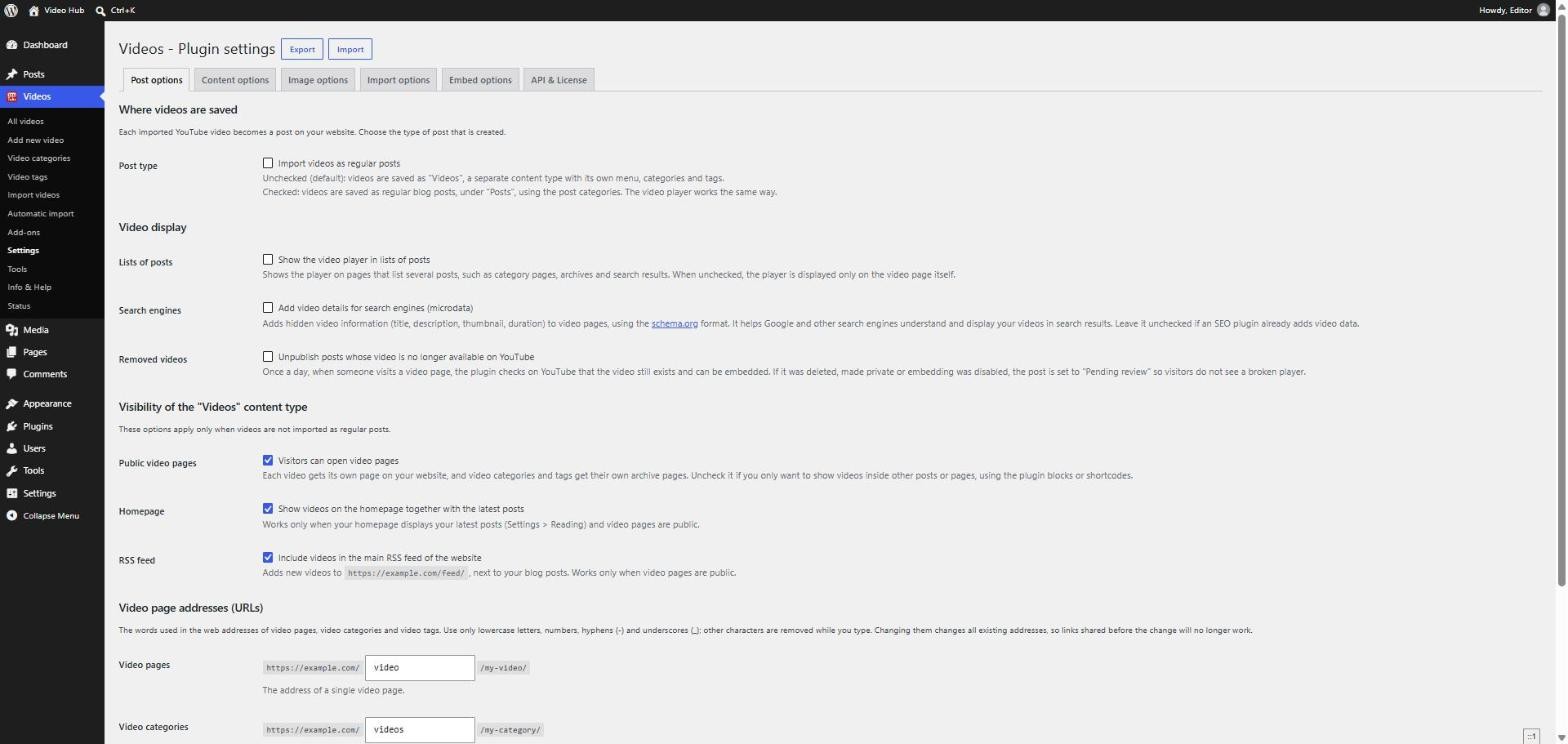
The tab has four sections: Where videos are saved, Video display, Visibility of the “Videos” content type and Video page addresses (URLs).
Where videos are saved
Post type — Import videos as regular posts
Unchecked (the default), every video is saved as a Video: a separate content type with its own menu, video categories and video tags. Keeping videos apart makes them easy to manage and to style with custom post type templates.
Checked, videos are saved as regular blog posts under Posts, using the post categories. The player works the same way in both cases.
Video display
Lists of posts — Show the video player in lists of posts
Shows the player on pages that list several posts, such as category pages, archives and search results. When unchecked, the player appears only on the video’s own page. Many players on one page make it heavier, so leave this off unless your theme needs it.
Search engines — Add video details for search engines (microdata)
Adds hidden video information — title, description, thumbnail and duration — to video pages in the schema.org format, so Google and other search engines understand the page. Leave it unchecked if an SEO plugin already adds video data, so the page doesn’t describe the video twice. More in video SEO in WordPress.
Removed videos — Unpublish posts whose video is no longer available on YouTube
Once a day, when someone visits a video page, the plugin asks YouTube whether the video still exists and can be embedded. The post is set to Pending review only when YouTube confirms that the video was deleted, made private, rejected or can no longer be embedded — an exceeded quota or a temporary YouTube error never unpublishes it, and unlisted videos or videos still processing stay published. Visitors then get your 404 page, while editors can still open the post.
The check runs when a video page gets a visit. To check your whole library at once, use Tools → Update videos.
Visibility of the “Videos” content type
These options apply only when videos are not imported as regular posts.
Public video pages — Visitors can open video pages
Each video gets its own page, and video categories and tags get their own archive pages. Uncheck it if you only want to show videos inside other posts or pages, with the plugin blocks or shortcodes: video pages are then hidden from visitors and search engines.
Homepage — Show videos on the homepage together with the latest posts
Mixes videos in with your latest posts. Works only when your homepage displays your latest posts (Settings → Reading) and video pages are public.
RSS feed — Include videos in the main RSS feed of the website
Adds new videos to your main feed, next to your blog posts. Works only when video pages are public.
Video page addresses (URLs)
The words used in the addresses of video pages, video categories and video tags. Each field is shown inside the full address, so you see the result as you type. Only lowercase letters, numbers, hyphens and underscores are kept; empty or duplicate values can’t be saved.
- Video pages — the address of a single video page (default
video). - Video categories — the page listing the videos of a category (default
videos). - Video tags — the page listing the videos with a tag.
Note: changing a value changes every existing address, so links shared before the change stop working. Set up redirects if your video pages are already indexed.
Next: choose what is copied from YouTube in the Content options tab.