
The Content options tab decides what Video Hub copies from YouTube when it creates a post: the title, the description, the publish date, categories and tags. The settings apply to every kind of import — a single video, a manual import or an automatic import — but only to videos imported after you change them. Posts that already exist are not modified.
Find it under Videos → Settings, on the Content options tab.
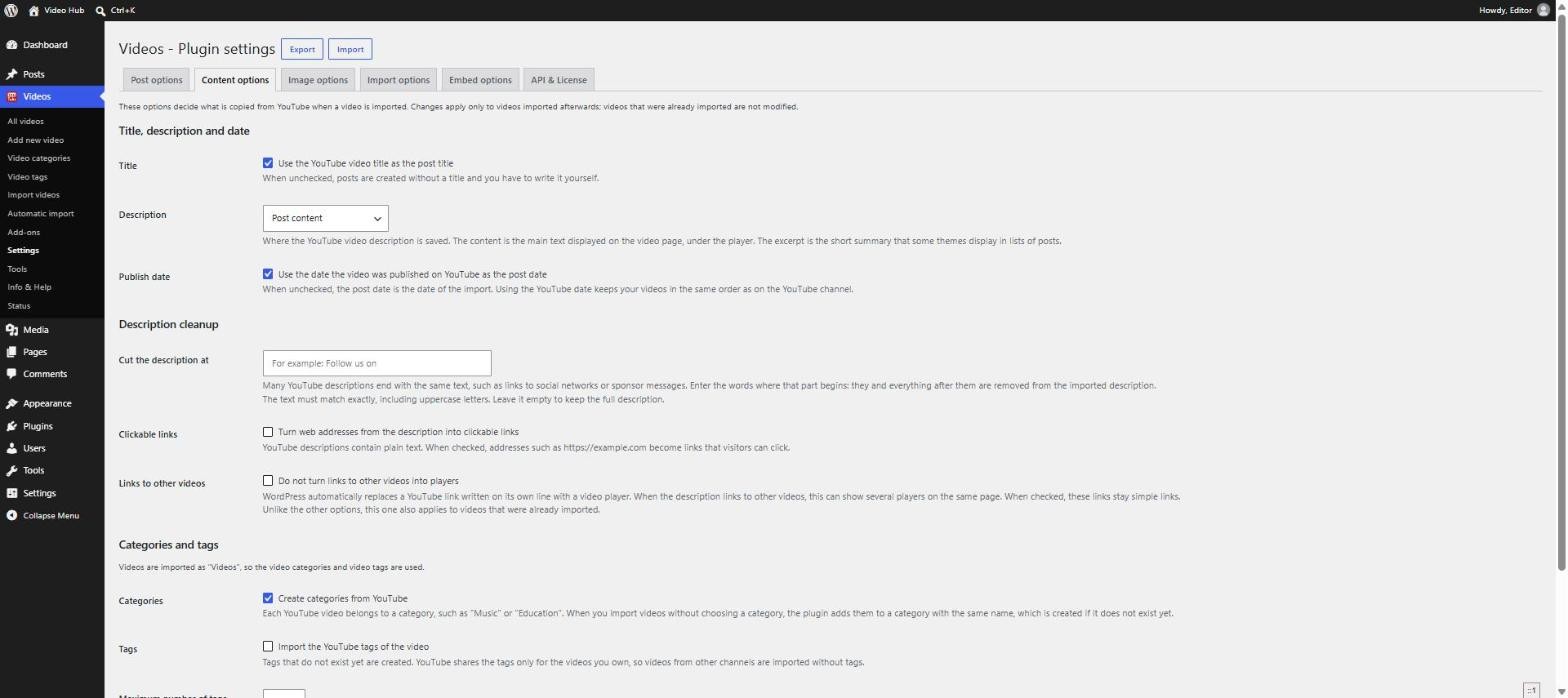
Title, description and date
Title
Use the YouTube video title as the post title. When unchecked, posts are created without a title and you write it yourself — useful when every video goes through an editor first.
Description
Where the YouTube description is saved: Post content, Post excerpt, Post content and excerpt or Do not import. The content is the main text under the player on the video page; the excerpt is the short summary some themes show in lists of posts.
Publish date
Use the date the video was published on YouTube as the post date. When unchecked, the post date is the import date. Using the YouTube date keeps your videos in the same order as on the channel.
Description cleanup
Cut the description at
Many descriptions end with the same block of text — social links, sponsor messages, “Follow us on…”. Enter the words where that part begins: they and everything after them are removed from the imported description. The text must match exactly, uppercase letters included. Leave it empty to keep the full description.
Clickable links
Turn web addresses from the description into clickable links. YouTube descriptions are plain text; with this checked, addresses such as https://example.com become links.
Links to other videos
Do not turn links to other videos into players. WordPress replaces a YouTube link that sits on its own line with a player, so a description that links to other videos can end up showing several players. When checked, those links stay simple links. Unlike the other options, this one also applies to videos that were already imported.
Categories and tags
The tab tells you which taxonomies are used: video categories and video tags for “Videos”, or the post categories and tags when you import as regular posts.
Categories — Create categories from YouTube
Every YouTube video belongs to a category, such as “Music” or “Education”. When you import videos without choosing a category, the plugin adds them to a category with the same name, creating it if needed. When you do choose a category for an import, that category is used instead.
Tags — Import the YouTube tags of the video
Tags that don’t exist yet are created. YouTube shares tags only for videos you own, so videos from other channels are imported without tags. If you import for a WordPress theme, set a tag taxonomy.
Maximum number of tags
How many tags are imported for each video, in the order set on YouTube.
Titles and descriptions with special Unicode characters — the “bold” letters some channels use, for example — import correctly, even on databases that use the older utf8 charset.
Next: decide how thumbnails are handled in Image options.